Sitecore to Sitefinity migrations can be very daunting. There are many complexities to be addressed, and many of them cause significant pressure on everyone involved. In this post, we explore some of the most common ones - but also some that get overlooked and could pose significant risks.
The Obvious Questions: Demonstrating Past Experience
Q: Have you migrated Sitecore to Sitefinity before?
A very logical opening question is to ask if the partner has already migrated Sitecore projects to Sitefinity. This opens the conversation for the next question - and many more.
Q: What were the challenges you faced and how did you overcome them?
Each migration is unique, so try to put some more details about your own project into the follow-ups. Anything you see as unique should be included here. Don't be soft - challenge the partner. They don't have to have answers to every question, but they should at least be asking the right ones.
While these questions help reduce risk by confirming your partner has relevant experience, remember that every WCM (Web Content Management) migration is unique. Once you are satisfied with the basics, it's time for the harder questions.
The Challenging Questions: Addressing Your Unique Needs
Q: What is the budget and the timeline?
If you get a precise estimate before any technical assessment - run. The best that can be given at this stage is either a large buffer estimate (which may be acceptable for now, but is not precise), or an estimate full of assumptions that the partner has outlined clearly. To arrive at a real budget and timeline, you need to evaluate those assumptions together on both sides.
Q: How will you identify the hidden business logic?
Both Sitecore and Sitefinity are WCMs that address larger organisational needs. In many cases, a Sitecore setup is a legacy one that has been in place for a long time - meaning there will likely be a significant amount of hidden business logic built by people who are no longer at the company and never onboarded anyone else. It's the "don't touch it" part of your project.
No judgement - this is not an uncommon situation. Check with your partner about their strategy for identifying and migrating this business logic, as it can be crucial to the project's success.
Q: How will you identify the pages, widgets, and content types?
This is a more technical question and is a large subset of the previous one. If you don't have a technical background, consider involving someone who does. Listen carefully to whether what you're being told makes sense and aligns with the complexity of your content structure.
Q: How will you address the SEO impact?
When embarking on a Sitecore to Sitefinity migration, it's crucial not to overlook the impact on your website's search engine optimisation (SEO). SEO plays a significant role in your site's visibility and organic traffic. Things like URL structure, metadata, XML sitemaps and robots.txt, mobile responsiveness, page load speed, 301 redirects, and broken links are sometimes tricky and time-consuming - but very important.
Q: How will you empower the content editors?
One of the key advantages of Sitefinity is its ease of use for content editing. Make sure your partner will help you utilise this fully and leave your content editors in a better position than before.
Q: What is the time-to-market story?
A common frustration - not always with the Sitecore platform itself - is that seemingly simple changes often require developer involvement. This should be accounted for, as it is frequently an implementation issue rather than a platform one. If your deployment process is complex and requires multiple approvals, this could become a real operational problem further down the road.
Q: What is the go-live plan?
A successful migration isn't complete until your new Sitefinity website is live and fully functional. In many cases, you also want to make sure Sitecore is decommissioned so you are not paying for two licences simultaneously.
Ask about your partner's go-live plan. How do they intend to transition your website without causing disruptions? A well-defined go-live plan includes detailed testing, quality assurance procedures, and contingency measures to handle unexpected issues during the transition. The goal is to stop Sitecore so you don't pay for both platforms at the same time.
Want to see how we respond to these questions? Challenge us.
Related Posts

Five Questions Your Azure Should Answer Every Week
If your team cannot answer five specific questions about your Azure subscription in one place, on de...
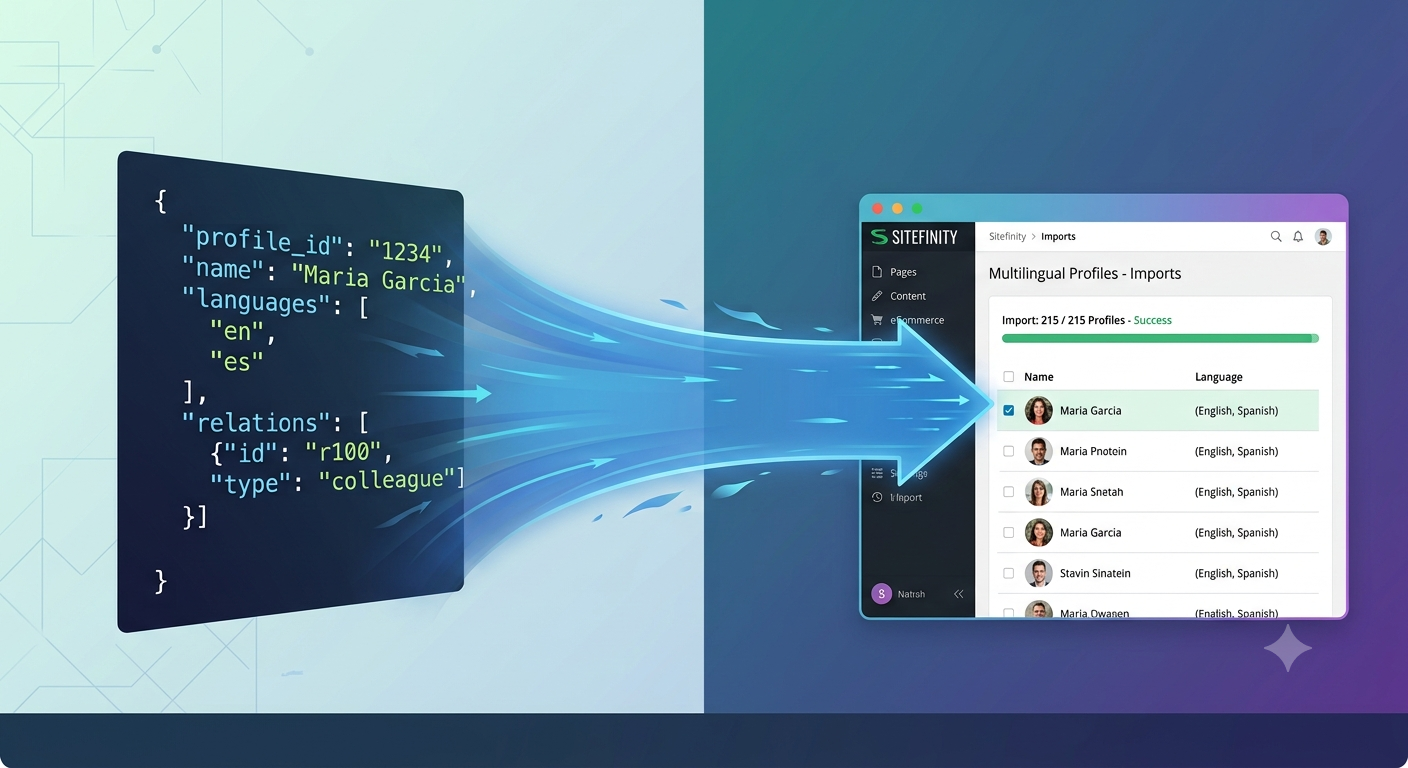
Chameleon: Custom JSON to Sitefinity Migration is Now Live
The first live production migration of custom system data into Sitefinity using Chameleon - 200+ mul...
CVE comparison: WordPress vs Sitefinity vs Umbraco vs Sitecore - the SecOps angle most miss
A single random week of NVD data showed 24 CVEs touching WordPress and zero touching Sitefinity, Umb...